Film Emulation
35mm pipelineFilm emulation,
physically modelled
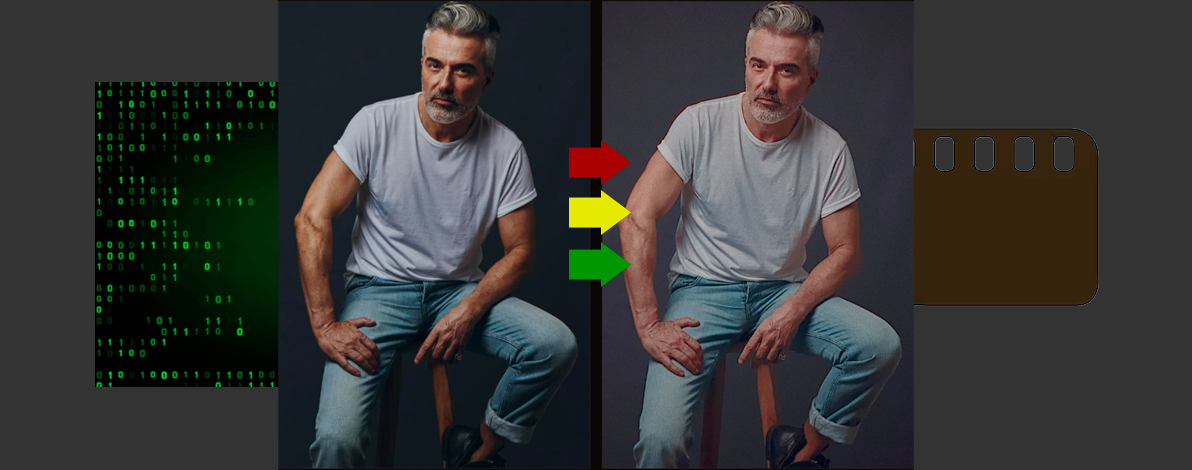
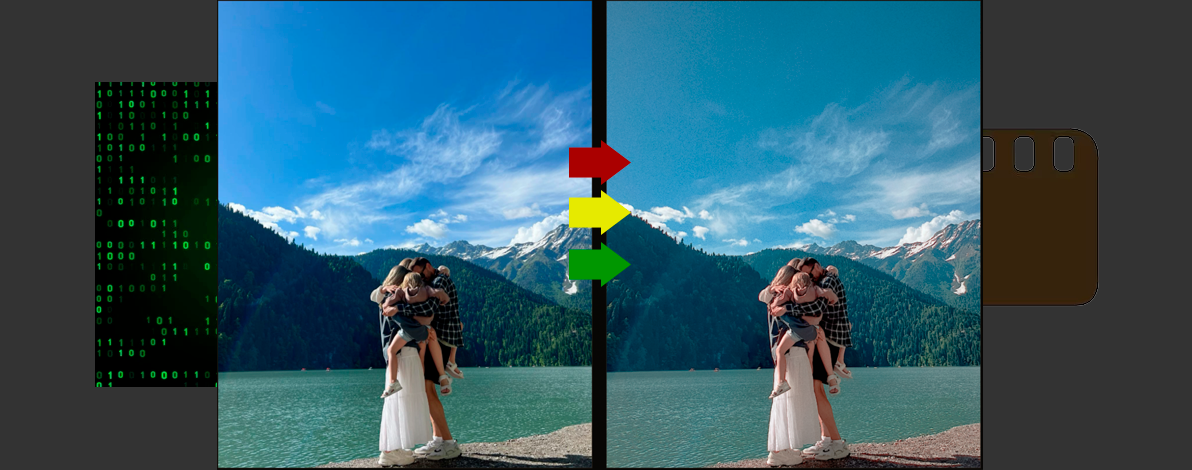
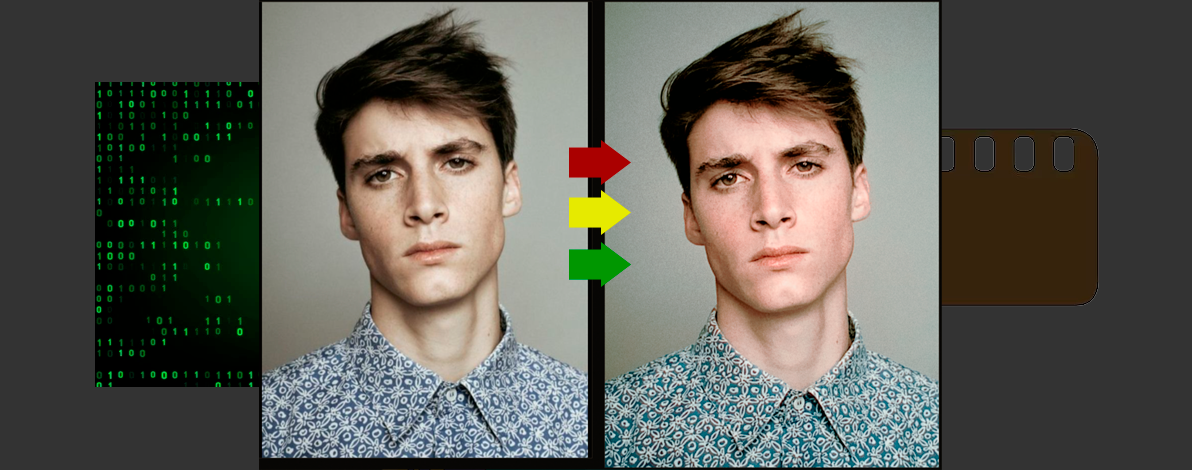
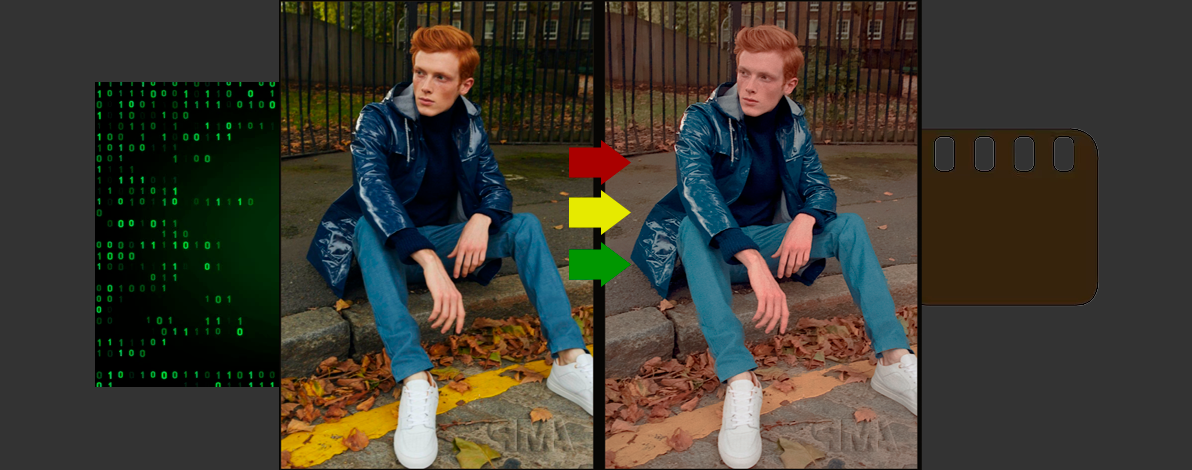
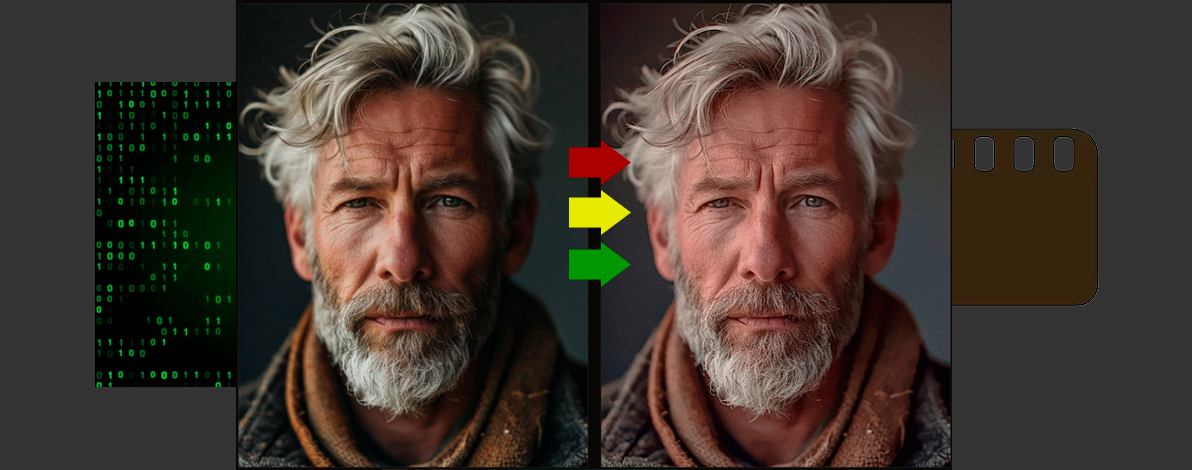
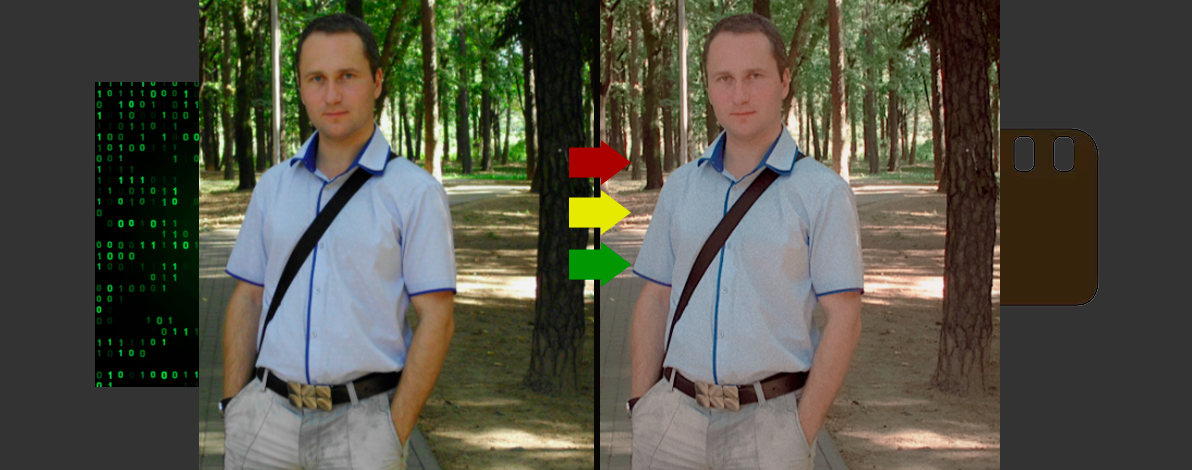
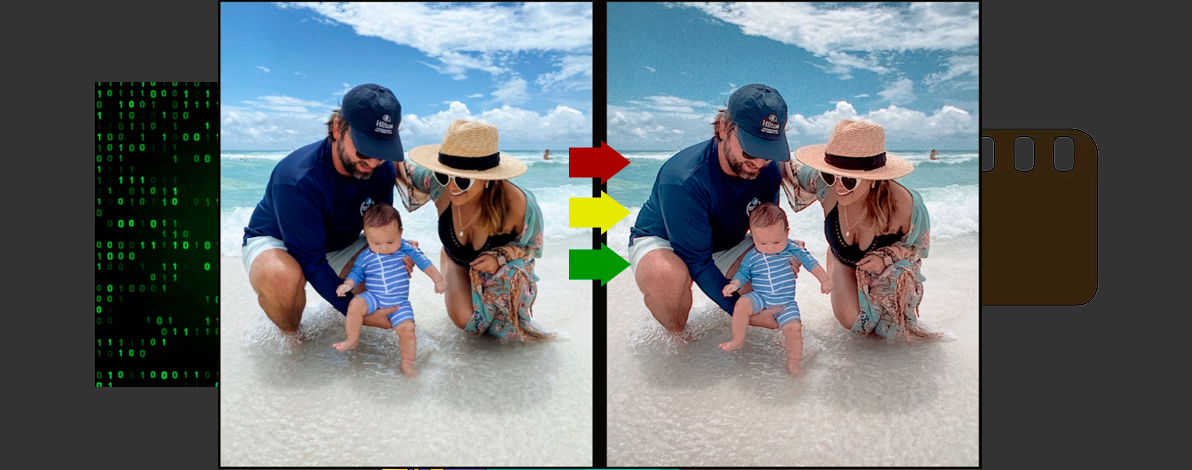
Emulsar turns a digital frame into film — not a filter, but a simulation: spectral sensitivity curves, stochastic grain, development, photon scattering, halation. A year of research into how real film responds to light.
Original
Result
How it works
Spectral sensitivity curves
Colours are converted to a spectral representation — just as happens when real film is exposed. Each layer — red, green, blue — responds to light according to curves measured from original emulsions.
Stochastic grain
Grain is modelled as clusters of silver halide crystals — not noise, but physically accurate aggregates with size and density distribution. Each frame is unique, as in a darkroom.
Photon scattering and edge softness
Light penetrating the gelatin layer scatters — creating simultaneously soft transitions and high local contrast. This is what distinguishes film sharpness from digital.
Halation and bloom
Reimagined from scratch: halation is reflection from the film base, bloom is the exposure of neighbouring crystals. Both effects modelled accounting for real light behaviour in a multilayer emulsion.
Development emulation
Contrast and textures are formed through chemical development simulation: nonlinear tone transfer, highlight compression, shadow lift — as a developer does in the tank.
Frame defects
Frame gate weave, development unevenness, gelatin layer defects — each frame differs slightly from the previous, as in real film shooting.
Examples
Top up account
Billing information — Required for invoicing. Saved once — will be pre-filled next time.


